What Common Fire Safety Mistakes Put Buildings At Risk In Wollongong?
Author: Pasiv Fire | Date: July 28, 2026
On this page:
- The Short Answer: The Most Common Fire Safety Mistakes We Find in Wollongong Buildings
- Why Did My Annual Fire Safety Statement Fail?
- What Counts as a Fire Safety Defect — and Which Ones Are Urgent?
- Why Are Fire Doors the Number One Failure Point in Wollongong Strata?
- Who Is Actually Responsible for Fire Safety in a Commercial or Strata Building?
- How Much Does It Cost to Fix Fire Safety Defects, and How Long Does It Take?
- FAQs
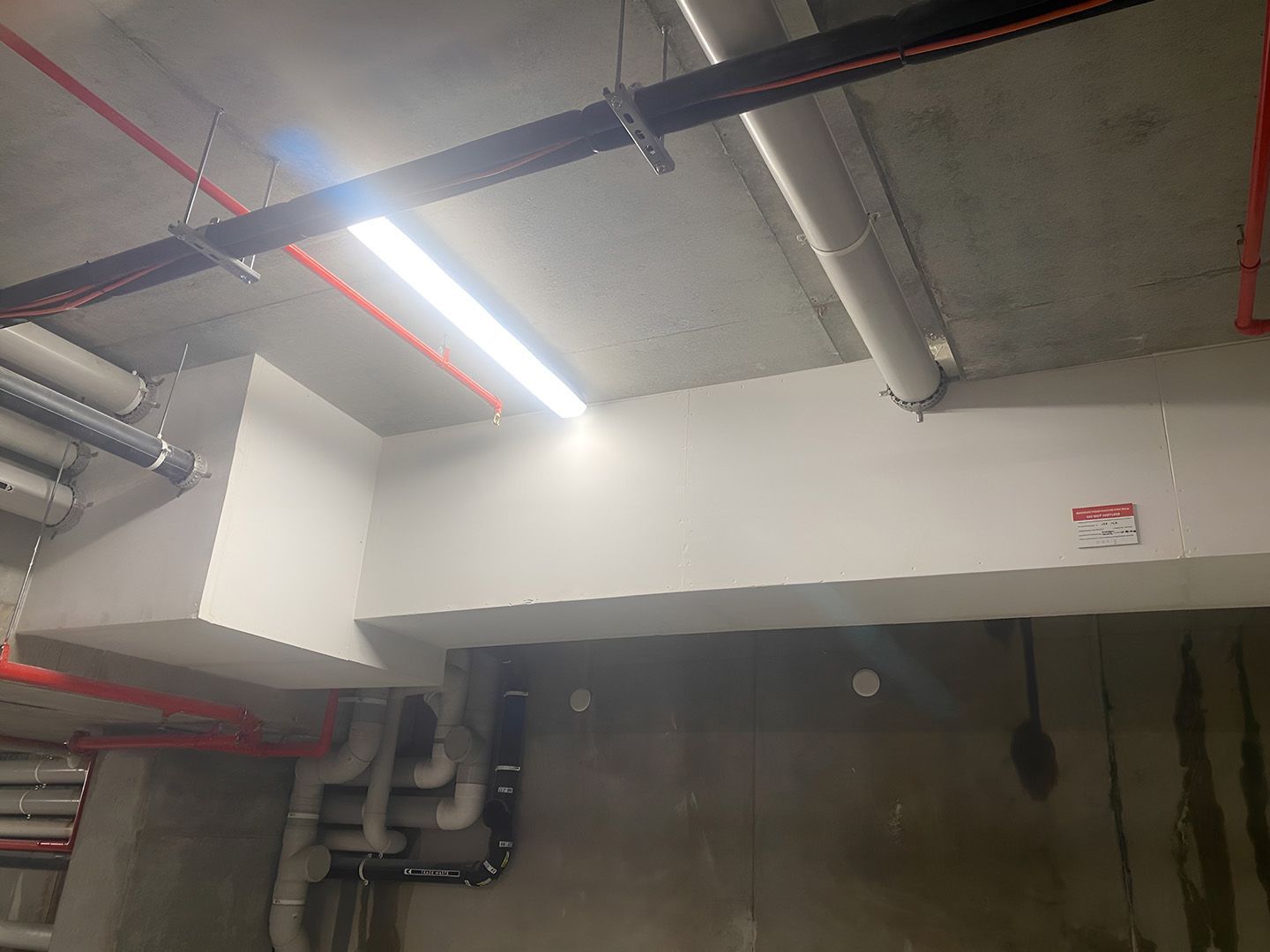
Most fire safety failures we find in Wollongong buildings aren't missing systems — they're broken passive systems nobody can see. A cable penetration cut through a fire-rated wall and never re-sealed, a fire door propped open on a landing, a collar left out around a PVC riser: these are the defects that turn a routine assessment into a failed Annual Fire Safety Statement. If you hold fire safety compliance responsibility for a strata building, commercial site, or industrial property in the Illawarra, the mistakes below are the ones we see on repeat.
The Short Answer: The Most Common Fire Safety Mistakes We Find in Wollongong Buildings
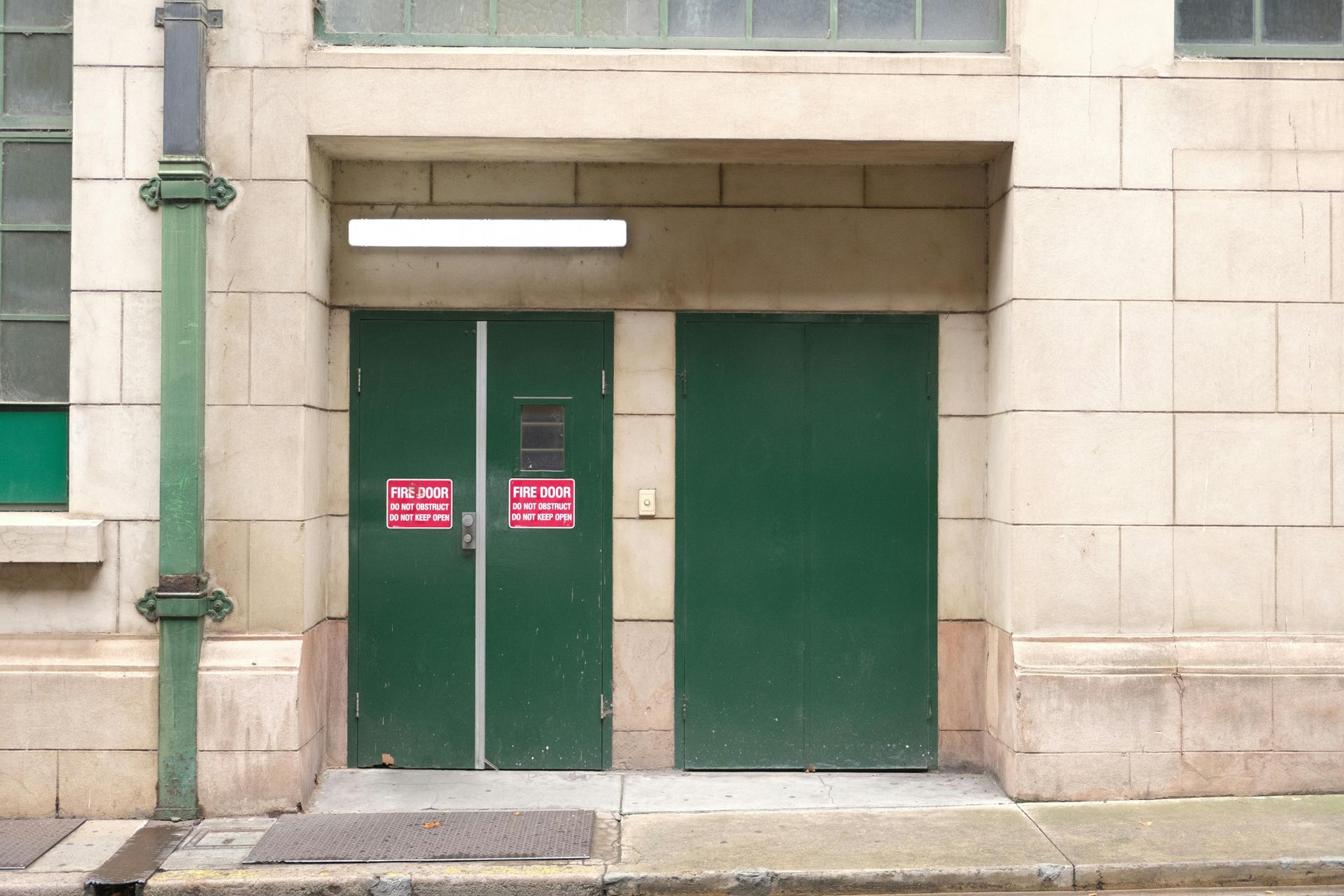
Walk enough Wollongong buildings ahead of an AFSS deadline and the same faults keep turning up. Service penetrations — data cables, plumbing, air conditioning lines — get run through fire-rated walls and floors during a fit-out or renovation, and the electrician, plumber or comms installer moves on without ever calling a fire protection contractor back to reinstate the rating. Fire doors get packed open with wedges, fitted with keyed hardware that stops the self-closer working, or have their intumescent and smoke seals painted over during a routine repaint.
In older CBD stock and the coastal apartment blocks around North Wollongong and Fairy Meadow, salt air corrodes door closers and hinges faster than most owners expect, so hardware that looked fine at the last assessment can fail a gap or closing force check twelve months later. And in unit blocks with PVC stormwater and sewer risers, it's common to find collars simply never installed at each floor penetration — a defect that's invisible until someone goes looking for it.
None of this is really about people cutting corners on purpose. It's what happens when trades and fire protection systems get treated as separate jobs. A cable gets pulled through a wall, the hole gets patched with whatever's on hand, and nobody flags that the wall was ever fire-rated in the first place.
Why Did My Annual Fire Safety Statement Fail?
An AFSS fails when a fire safety measure listed on the schedule can't be assessed as compliant with the standard it was certified against — usually because it's been altered, damaged, or was never installed correctly in the first place. Under the NSW framework administered locally by Wollongong City Council, an AFSS is due annually within your building's anniversary period, and every measure on it has to be assessed by a competent fire safety practitioner before the statement can be signed.
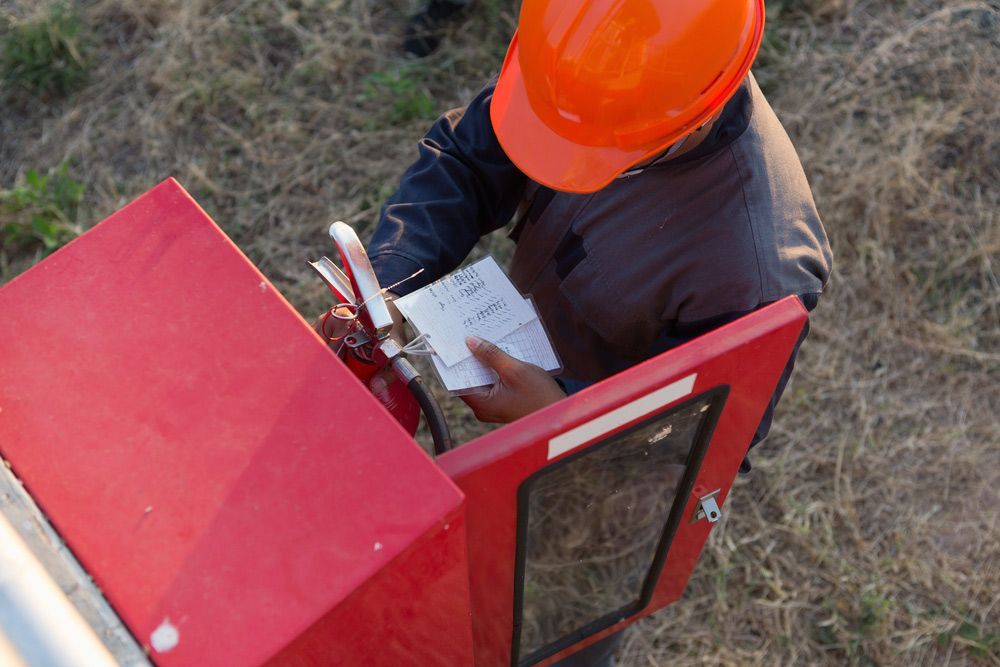
A competent-person assessment isn't a walk-through with a clipboard tick-list. It involves physically testing self-closing hardware on fire doors, checking penetrations and seals against the certified system they were installed to, confirming compartmentation is intact between fire-rated zones, and reviewing any building work carried out since the last statement. A lapsed or failed AFSS is the single most common trigger for council enforcement action, because it signals to the regulator that nobody has verified the building's passive fire protection since the previous cycle — regardless of whether anything has actually gone wrong.
The practical issue for most owners is timing: defects found during the assessment window often can't be fixed before the statement is due, which forces a choice between lodging late or lodging with exclusions. Getting ahead of the anniversary date with an interim inspection is the only reliable way to avoid that scramble.
What Counts as a Fire Safety Defect — and Which Ones Are Urgent?
A fire safety defect is any point where a certified fire safety measure no longer performs as it was designed and rated to — whether that's a door that won't self-close, a penetration through a fire-rated wall with no tested fire-stopping system installed, or a smoke seal that's been painted over and can no longer expand under heat. Not every defect carries the same risk and treating them all as equally urgent usually means the wrong ones get fixed first.
The table below reflects the pattern we see across Wollongong strata and commercial buildings — egress and compartmentation defects first, concealed breaches next, cosmetic issues last.
| Defect | Why It Fails | Urgency | Typical Fix |
|---|---|---|---|
| Fire door propped, wedged, or hold-open device fitted | Defeats self-closing function required for the door to perform under fire conditions | High — egress and compartmentation | Remove obstruction, retrain building users, reinstate closer function |
| Non-compliant hardware fitted to fire door (wrong hinges, keyed lockset, unrated vision panel) | Alters the tested door assembly so it no longer matches its certified configuration | High | Replace with rated, compatible hardware matched to the door's FRL |
| Smoke seals or intumescent strips painted over | Paint can prevent the seal expanding and sealing the gap when heated | Medium–High depending on location | Strip back and reinstate seal, repaint around it in future works |
| Service penetration through fire-rated wall/floor with no fire-stopping | Cable, pipe or duct creates a direct path for fire and smoke between compartments | High — concealed but critical | Install tested collar, wrap, mastic or batt-and-coat system matched to the service and substrate |
| Generic expanding foam used as "fire sealant" | Foam is not a tested fire-stopping product and offers no rated performance | High once identified | Remove and replace with a certified fire-stopping system |
| Missing fire collar on PVC riser in unit block | PVC pipe melts under fire load, leaving an open penetration between floors | High | Retrofit collar to the pipe's certified specification |
| Cosmetic damage to door leaf or frame (dents, scuffs) not affecting closing or seals | Doesn't compromise the door's rated performance | Low | Monitor, repair during scheduled maintenance |
The honest picture: a building with ten minor cosmetic notes and one propped fire door has one urgent problem, not eleven. Triage by what actually breaches compartmentation or blocks egress and schedule the rest.
Why Are Fire Doors the Number One Failure Point in Wollongong Strata?
Fire doors fail assessments more often than any other measure because they're a moving, wearing assembly that ordinary building use pulls out of tolerance. An assessor checks the gap between the door and frame against the tolerances the door was certified to, confirms the self-closer brings the door fully into the frame from any open position without human help, and inspects intumescent and smoke seals for damage, paint-over, or removal. They'll also check for a current compliance tag or label and look for any unauthorised holes, hardware, or vision panels added after installation.
Painting over a smoke seal seems harmless — it's usually done by a painter with no idea the strip has a fire-rated function. But a sealed-over intumescent strip can't expand properly under heat, which is enough to void the door's rating even though it looks untouched. The same applies to hardware: swap a certified door closer for a cheaper unrated unit or fit a keyed lockset that lets the door be left open, and the whole assembly no longer matches what it was tested and certified as.
Wollongong's coastal apartment stock adds a local wrinkle. Salt-laden air accelerates corrosion in door closers, hinges, and latch mechanisms faster than in inland buildings, so hardware that passed twelve months ago can seize or lose closing force by the next assessment. It's genuinely worth noting that most of these fixes are repairs to the existing door set — new hinges, a replacement closer, reinstated seals — rather than full door replacement. Full replacement is rarely the better spend unless the leaf or frame itself is structurally compromised.
Fire doors typically need to be checked as part of every AFSS cycle at minimum — annually — though buildings with heavy pedestrian traffic, coastal exposure, or a history of defects often benefit from an informal mid-cycle check to catch hardware wear before it becomes a failed assessment.
In a strata scheme, the owner’s corporation carries the legal obligation to maintain the building's fire safety measures and lodge the AFSS, though in practice this responsibility is usually delegated to the strata committee and managed day-to-day by a strata or building manager. In a commercial or industrial building, the obligation sits with the building owner, regardless of who occupies or leases the space — a tenant's fit-out work is a common source of defects, but the owner remains accountable for the measures on the statement.
This is where a lot of confusion creeps in. A strata committee member assumes the managing agent is handling compliance; a commercial landlord assumes a tenant's electrician "would have known" not to breach a fire-rated wall. Neither assumption holds up against a defect notice. The practical answer is that whoever's name is on the AFSS is accountable for what's on it, which is why an independent assessment — one that isn't relying on second hand assurances from trades or tenants — is the only way to know where a building actually stands.
If you're unsure whether your building would pass today, our fire safety services in Wollongong start with a walk-through assessment of every measure listed on your statement, so you know exactly what you're carrying into the assessment rather than finding out at lodgement.
How Much Does It Cost to Fix Fire Safety Defects, and How Long Does It Take?
Cost and timeframe depend heavily on the building, so any figure here is indicative and building-dependent rather than a quote. A small strata block with a handful of fire doors and a couple of riser penetrations might see remediation completed in a day or two once the assessment has identified what's needed. A multi-level commercial or industrial site with extensive service penetrations, multiple fire-rated compartments, and door sets across several floors is a larger, staged job — often planned across a budget cycle rather than resolved in one visit.
Not every defect needs fixing before the next statement is due. Egress paths and door sets are the priority spend because they carry the highest risk and the most direct compliance exposure. Concealed riser and penetration breaches come next — they're not immediately visible, but they compromise compartmentation and tend to multiply after every trade visit if left unaddressed. Cosmetic items can reasonably wait for scheduled maintenance.
Most of these defects are cheaper to prevent than to remediate, which is why our fire prevention services in Wollongong focus on catching breaches before the assessment date, rather than discovering them at the eleventh hour when there's no time left to plan the work properly. Defects rarely appear overnight — they accumulate between assessments, which is why regular fire system testing is the cheapest insurance a building owner can buy.
FAQs