The Importance Of Fire Stopping In High-rise Buildings
Author: PASIV Fire | Date: February 18, 2026
On this page:
- Understanding Fire Stopping as Passive Fire Protection
- Why Fire Stopping Is Critical in High-Rise Structures
- Containing Fire & Smoke to Protect Occupants
- Maintaining Structural Integrity During Fire Events
- Managing Service Penetrations & Building Interfaces
- Compliance Requirements for Fire Stopping Systems
- Integrating Fire Stopping Into New Construction Projects
- Fire Stopping as Part of Fire Prevention in Wollongong
- Get in Touch
High-rise buildings present complex fire safety challenges due to their height, density and reliance on shared infrastructure. Fire and smoke can move rapidly through concealed spaces if passive fire protection measures are not designed and installed correctly. In these environments, preventing the spread of fire is just as critical as detecting it, particularly where evacuation times are longer and building systems are highly interconnected.
For professionals involved in design, construction and compliance, fire stopping is a core element of effective fire safety planning. As part of broader
fire prevention services Wollongong projects rely on, fire stopping supports compartmentation, structural performance and occupant protection. It plays a critical role in ensuring fire-rated elements perform as intended when penetrated by services, helping high-rise buildings meet regulatory requirements and maintain safety throughout their lifecycle. When integrated correctly, fire stopping strengthens overall fire prevention in Wollongong by reducing risk, supporting compliance and protecting lives and property.
Understanding Fire Stopping as Passive Fire Protection
New ParagraphFire stopping is a passive fire protection measure designed to seal openings, joints and penetrations within fire-rated walls, floors and structural elements. These systems restore the integrity of fire compartments where services or construction interfaces interrupt fire-resistant barriers.
Fire stopping typically includes:
- Sealing penetrations through fire-rated walls and floors
- Protecting joints between building elements
- Using tested systems compatible with specific substrates
- Maintaining fire and smoke resistance ratings
When installed in accordance with tested configurations, fire stopping ensures fire-rated assemblies continue to function as designed. This consistency is essential in high-rise buildings, where passive protection plays a central role in slowing fire spread and supporting safe evacuation strategies.
Why Fire Stopping Is Critical in High-Rise Structures
High-rise buildings contain numerous vertical and horizontal pathways that can allow fire and smoke to spread rapidly if not properly sealed. Service risers, lift shafts and inter-floor penetrations present particular risks when passive fire protection is incomplete or compromised.
Fire stopping is critical because it:
- Limits the spread of fire between levels
- Restricts smoke movement through concealed cavities
- Reinforces compartmentation strategies
- Protects essential building services
By slowing fire progression, fire stopping reduces the scale and intensity of fire events. This containment supports safer evacuation conditions and helps limit damage in buildings where emergency access and evacuation are inherently more complex.
Containing Fire & Smoke to Protect Occupants
Smoke inhalation is one of the most serious risks during fire incidents, often spreading faster than flames themselves. In high-rise buildings, smoke can quickly compromise escape routes if it travels through unsealed openings.
Effective fire stopping helps:
- Maintain tenable evacuation paths
- Reduce smoke migration between compartments
- Protect egress routes and stairwells
- Support occupant safety during emergencies
Containing smoke as well as fire gives occupants valuable time to evacuate safely. This is particularly important in multi-storey buildings, where distance from exits and shared escape paths increase reliance on effective passive fire protection.
Maintaining Structural Integrity During Fire Events
Fire exposure can significantly weaken structural elements if heat is allowed to spread beyond intended fire compartments. Unsealed penetrations and joints allow heat transfer that can compromise load-bearing components and increase the risk of broader structural damage.
Fire stopping supports structural integrity by:
- Preserving fire resistance ratings of walls and floors
- Limiting heat transfer through service penetrations
- Reducing the likelihood of progressive structural failure
- Supporting predictable building performance under fire conditions
Maintaining the integrity of fire-rated assemblies helps ensure buildings respond as designed during fire events. This protection can limit damage, improve post-incident safety assessments and contribute to safer outcomes for both occupants and future building use.
Managing Service Penetrations & Building Interfaces
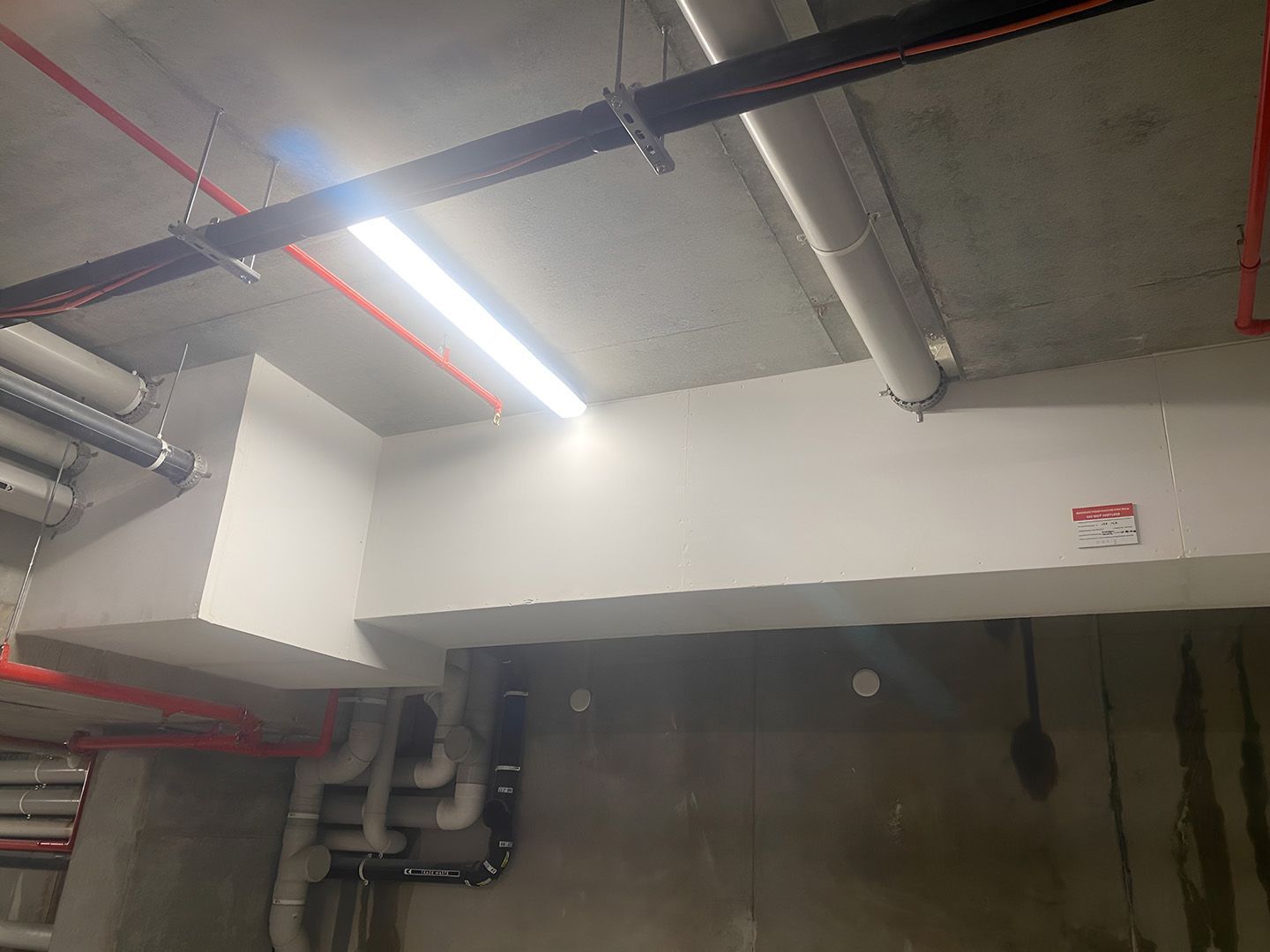
Modern high-rise buildings incorporate extensive mechanical, electrical and plumbing services that pass through fire-rated elements. Each penetration introduces a potential weakness if it is not properly protected with compatible fire stopping systems.
Fire stopping at service interfaces involves:
- Sealing around pipes, cables and conduits
- Addressing mixed-service penetrations correctly
- Ensuring compatibility with surrounding materials
- Maintaining integrity during future service changes
Careful management of these interfaces is essential for long-term fire safety. As buildings are modified or services upgraded, maintaining effective fire stopping prevents the creation of new fire paths and preserves the performance of passive fire protection systems over time.
Compliance Requirements for Fire Stopping Systems
Fire stopping is a regulated requirement in high-rise construction and refurbishment projects. Australian Standards and building codes require fire-rated elements to maintain their performance when penetrated by services or joints.
Key compliance considerations include:
- Using fire stopping systems tested to relevant standards
- Installing systems exactly as tested and specified
- Maintaining documentation for certification and audits
- Verifying installations through inspection processes
Failure to comply can lead to project delays, costly rectification and increased risk exposure. Addressing compliance early ensures fire stopping solutions meet regulatory expectations and remain verifiable throughout the building lifecycle.
Fire stopping should be planned and coordinated from the early stages of construction rather than treated as a final task. Early integration reduces conflicts between trades and helps maintain the integrity of fire-rated elements.
Successful integration involves:
- Coordinating service layouts with fire-rated assemblies
- Scheduling installation to avoid damage by later trades
- Allowing sufficient access for correct application
- Inspecting installations before enclosure
When fire stopping is embedded into construction planning, it supports smoother project delivery and reduces the risk of compromised fire protection. This proactive approach also helps ensure long-term safety and compliance.
Fire Stopping as Part of Fire Prevention in Wollongong
Fire stopping plays a vital role within comprehensive fire prevention strategies for high-rise buildings. By limiting the spread of fire and smoke, it supports safer environments, protects critical building elements and reduces the potential impact of fire events on occupants and assets. In complex, multi-storey structures, this level of containment is essential for maintaining building performance under fire conditions.
For professionals involved in design, construction and compliance, fire stopping should be viewed as a long-term investment in building safety rather than a box-ticking exercise. Correctly specified and installed systems support ongoing compliance, reduce the risk of future rectification and help ensure buildings continue to meet safety requirements as they evolve over time.
At PASIV Fire, we deliver specialist solutions as part of the professional fire prevention services Wollongong project teams rely on for safety and compliance. If you are integrating fire stopping into a high-rise project or reviewing the requirements of fire prevention in Wollongong, our team can provide expert guidance to support regulatory compliance, structural performance and long-term occupant protection. If you are planning a high-rise project or need expert guidance on compliant fire stopping solutions, we invite you to contact us to discuss how our team can support your fire prevention and safety requirements.